
Free to visit
The castle site is open all day, every day. The car park has separate seasonal closing times.
Over 900 years of history
A café in one of Wakefield’s most distinctive settings, close to the ruins and wide views across the Calder Valley.
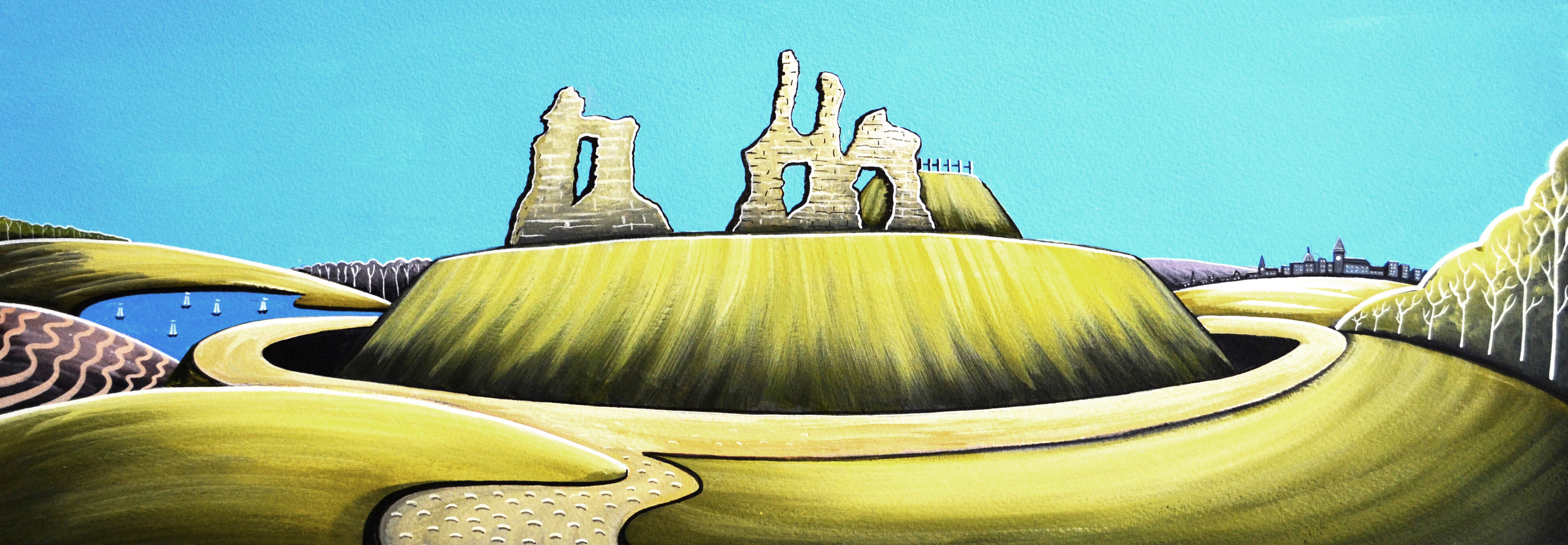
A landmark above Wakefield
A bold illustrated view of the castle, its hill and the paths around it.
Sandal Castle has origins in the early 1100s and began as a motte-and-bailey castle. Its hilltop position gave it commanding views across the surrounding landscape.
The Battle of Wakefield took place nearby on 30 December 1460. Richard, Duke of York, was killed in the battle. The castle also has links with Richard III, later declined, and was involved during the Civil War period.
Twentieth-century archaeological excavations helped reveal more of the castle’s development. Today it is an open, historic site where visitors come to walk, take in the views and spend time outdoors.
Official Sandal Castle informationThe castle site is open all day, every day. Outer paths suit many wheelchairs and pushchairs, but some areas are steep, uneven or reached by steps.
The castle site is open all day, every day. The car park has separate seasonal closing times.
Outer paths suit many wheelchairs and pushchairs, but some areas are steep, uneven or reached by steps.
Wakefield Council welcomes well-behaved dogs on leads at the castle. Café-specific rules are still being confirmed.